
When a family looks into additional inscriptions, the first question is often how the new wording will fit alongside the names already carved. On an Arabic Memorial Headstone, the family may want to carry through the script and layout used in the original tribute. The most useful starting point is to read the existing inscription as a whole and identify the details that give it meaning. For a family adding a name to an Asian Memorial Headstone, those details might include the order of names, the choice of characters or the placement of an English translation.
Start with the headstone as it stands
A straight-on photograph of the full headstone helps a stonemason understand how the lettering sits on the stone. Close-up photos can show the finish, the shape of individual letters and any decorative details near the space where the new inscription might go. If the original lettering has weathered, an older photograph or a copy of the original wording may help the family confirm a name or date.
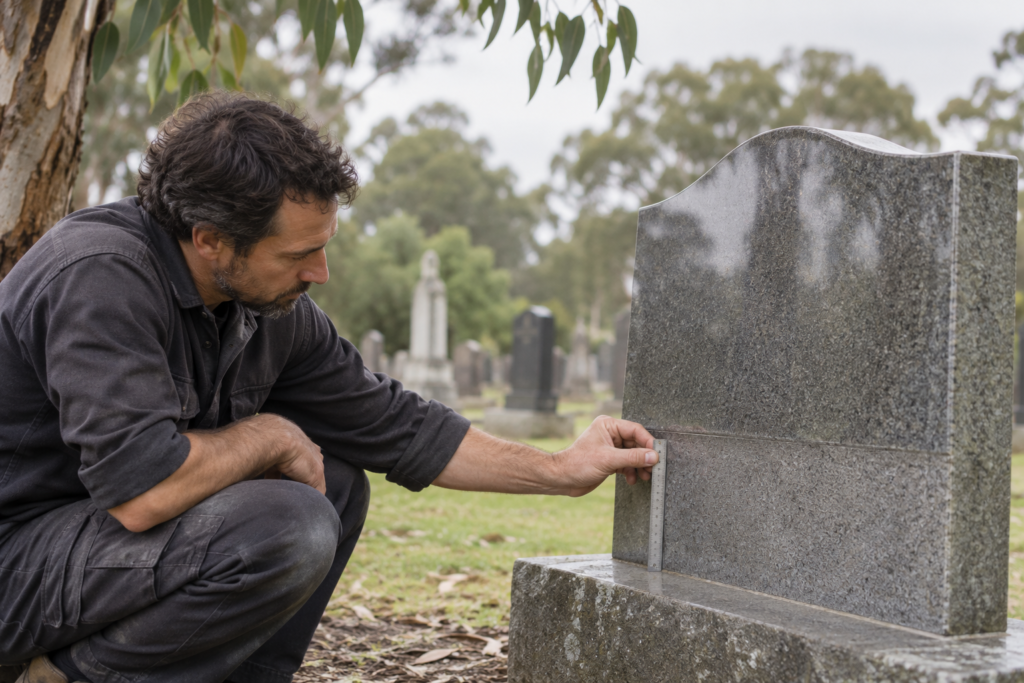
The space available can affect what the family chooses to include. A blank area beneath the original inscription may look generous in a photo, but the new lines still need enough room to be legible and sit comfortably within any borders. A stonemason can assess the space in person and explain whether the existing letter size and finish can be matched. If space is limited, the family can ask to see a shorter inscription at a comfortable letter size before deciding what to keep.
It is also worth asking the cemetery what it requires for work on an existing memorial. The family can check whether the proposed work needs approval, who can authorise it and what details the cemetery needs from the stonemason. Checking early gives relatives time to gather any paperwork while they consider the wording.
Agree on the wording before arranging the layout
A useful first draft contains the details the family considers essential, usually the person’s name and the dates they wish to include. From there, relatives can discuss whether to add a relationship, a short dedication or a line with personal or religious significance. Reading the draft beside the existing inscription can help the family decide whether it feels appropriate for the shared memorial.
Where the wording uses more than one language, a family member who reads each language can check the spelling, names and intended meaning. The family can also decide whether both versions should contain the same information or whether each serves a different purpose. For example, one version might use the name by which the person was known to relatives, while the other uses the name familiar to friends and colleagues.
Keeping one agreed written copy helps when several people are involved. Small differences can appear as drafts pass between relatives, particularly in dates, spacing and the order of names. Having one person collect feedback and send the agreed version to the stonemason makes it easier to trace any differences between the wording and the final proof.
Review the proof as it will appear on the stone
A layout proof lets the family check the new lines alongside the original inscription. It should show where each line starts and ends, how closely the new lettering sits to the old and whether there is enough space around both. Seeing the complete arrangement can make it easier to choose between two versions that looked equally suitable as plain text.
The final review is a good time to read each name and date against the agreed copy. Where the memorial uses multiple scripts, someone who reads each script should review the proof itself so they can catch a misplaced character or an awkward line break. Once the family has approved the layout, keeping a copy of it with the original photos gives relatives a record of what they agreed to.
Families can plan a new headstone inscription by checking available space, agreeing on the wording and reviewing a proof before carving begins.